

Rusting Control Arms – A Recurring Issue in Nissan Qashqai and Toyota Avensis
Rusting control arms and suspension beams – issue in Nissan Qashqai I (J10), Nissan Qashqai II (J11) and Toyota Avensis T25
Control arms for Nissan Qashqai I (J10), Nissan Qashqai II (J11) and Toyota Avensis T25 are among the most frequently rotating suspension components in independent workshops across Europe.
Mechanics consistently report recurring эксплуатаtion issues:
- severe surface and structural corrosion,
- seized mounting bolts,
- premature ball joint wear,
- worn rubber-metal bushings.
This article answers the most common questions from automotive forums and professional groups while presenting a workshop-ready solution that significantly improves repair efficiency.
Why do control arms in Nissan Qashqai I (J10) rust?
In Qashqai J10, front lower control arms are particularly exposed to:
- aggressive corrosion (road salt, moisture),
- bolt seizure inside bushings,
- ball joint damage,
- accelerated bushing deterioration.
Why do control arms in Nissan Qashqai I (J10) rust?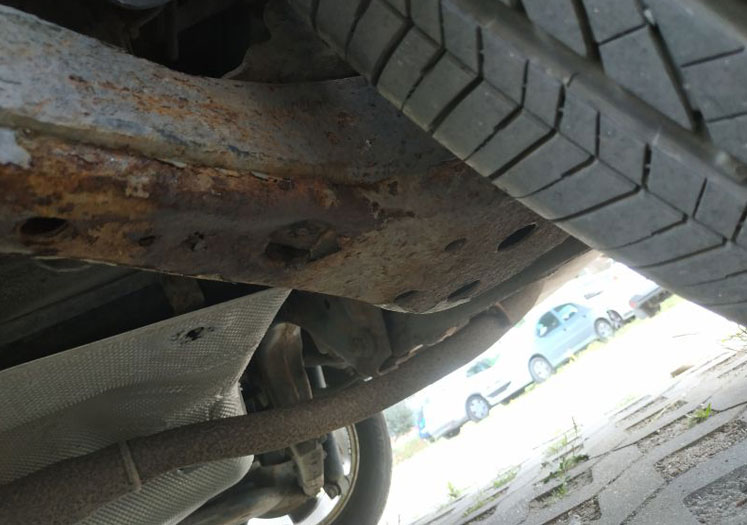
Frequently asked question:
Should the entire control arm be replaced, or only the ball joint/bushings?
Expert answer:
In professional workshop practice, complete control arm replacement is recommended in most cases. Structural corrosion and seized bolts make partial repair economically inefficient and time-consuming. Additionally, working on corroded components increases the risk of recurring play.
Does Nissan Qashqai II (J11) have the same suspension problem?
Although structurally updated, Qashqai J11 still suffers from corrosion-related suspension issues, especially in winter conditions.
Typical symptoms:
- knocking during acceleration and braking,
- vehicle pulling,
- uneven tire wear,
- excessive play detected during inspection.
Common question:
Why does suspension play return after several thousand kilometers?
Most common causes:
- reuse of old corroded bolts,
- improper tightening under load,
- low-quality aftermarket components,
- corrosion in subframe mounting points.
Rear suspension beam corrosion in Qashqai J10 and J11
Users also report corrosion of the rear torsion beam.
FAQ:
1. Can the beam be regenerated?
Surface corrosion – yes. Structural perforation – replacement recommended.
2. Does beam corrosion affect wheel alignment?
Yes. Structural deformation can influence rear axle toe settings and overall stability.
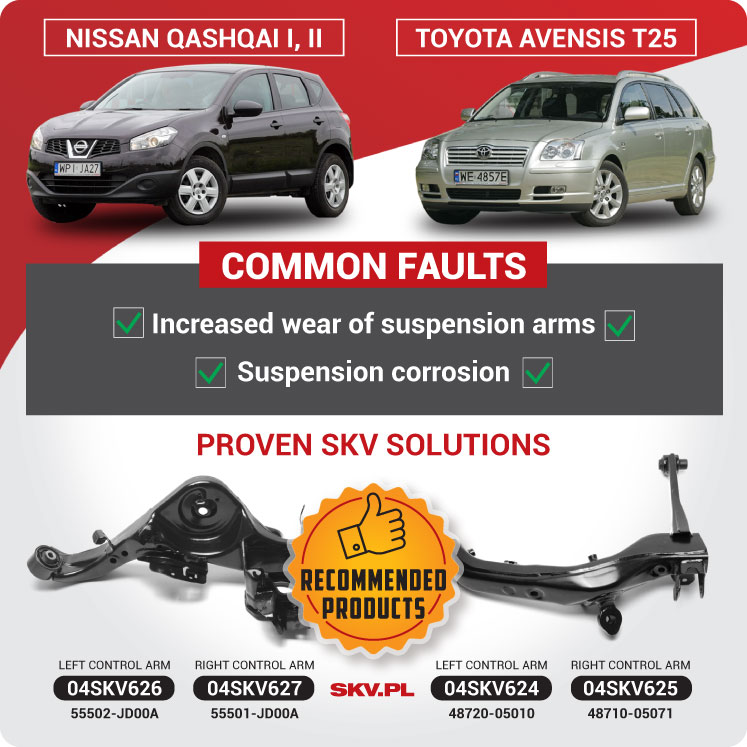
Toyota Avensis T25 – why frequent control arm replacement?
The Avensis T25 is known for durable powertrains, yet front suspension generates repeated service cases:
- worn ball joints,
- corroded arms,
- seized eccentric bolts,
- alignment adjustment difficulties.
Common online question:
Should both control arms be replaced simultaneously?
Workshop recommendation: yes. Balanced suspension wear improves stability and reduces double labor costs.
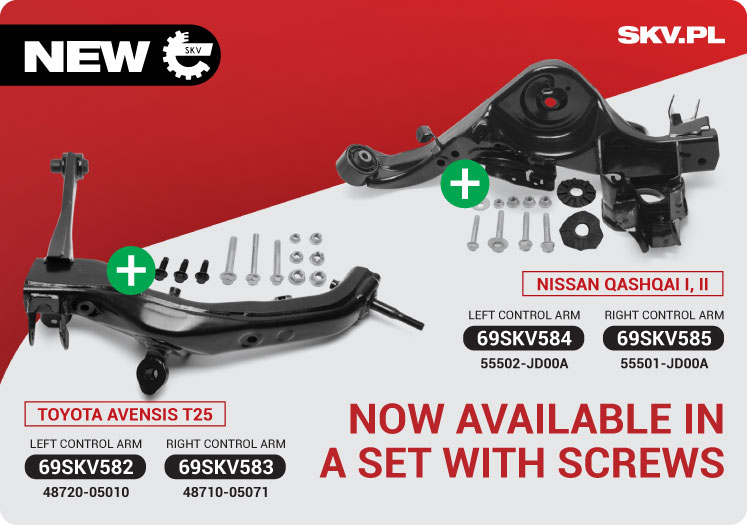
Seized bolts are a primary factor increasing repair time in:
- Nissan Qashqai I (J10)
- Nissan Qashqai II (J11)
- Toyota Avensis T25
SKV has expanded its offer to include control arms delivered complete with new mounting bolts.
Nissan Qashqai I & II – references
Sought-after numbers:
NEW – complete with bolts:
Toyota Avensis T25 – references
Sought-after numbers:
NEW – complete with bolts:
Why does a bolt kit increase workshop profitability?
✔ Reduced repair time
✔ No need for additional mounting hardware orders
✔ Elimination of seized bolt issues
✔ Higher cost predictability for end customers
A ready-to-sell solution: high turnover, competitive pricing and a direct answer to common suspension failures.
Expert Summary
High suspension part rotation in Qashqai I, Qashqai II and Avensis T25 results from operating conditions and steel component corrosion susceptibility.
Complete control arms with mounting bolts:
- reduce repair time,
- increase workshop productivity,
- minimize unforeseen installation complications.
Order today and provide your customers with a durable, complete repair solution.
