

SKV air conditioning compressors - how they work and how to choose the right model
An air conditioning compressor is one of the most important components in a vehicle A/C system. It compresses the refrigerant and keeps it circulating, which allows the system to cool the air entering the cabin effectively. When the compressor does not work properly, the performance of the entire system drops and driving comfort clearly deteriorates.
The SKV 84 product group currently includes nearly 200 air conditioning compressor models for passenger cars and light commercial vehicles. It is a broad product range designed for popular aftermarket applications and selection based on catalogue data and OE numbers.
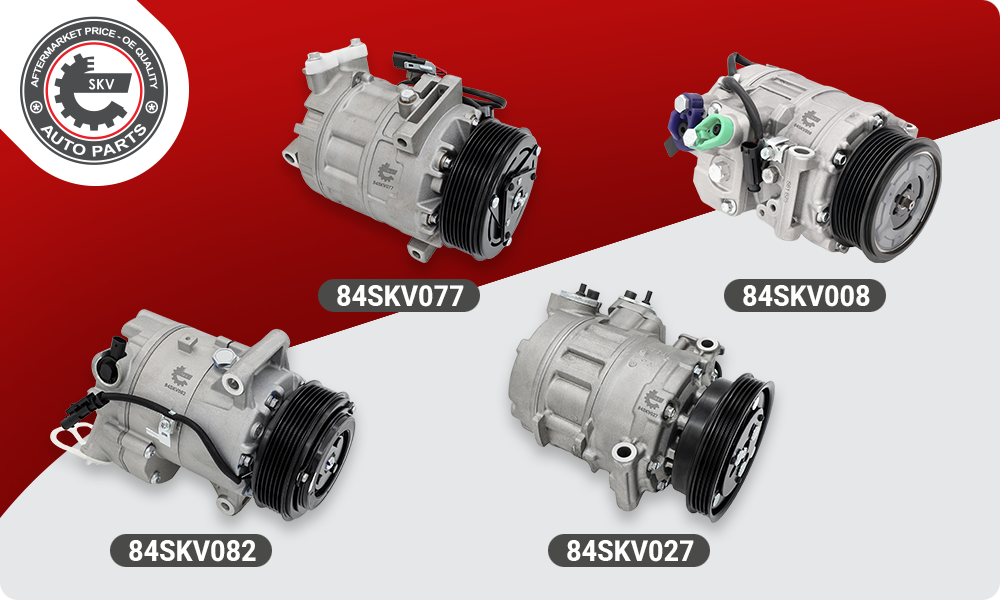
The full range in this product group is available in the SKV catalogue under the Air Conditioning category
What is an air conditioning compressor?
The air conditioning compressor, also called the A/C compressor, is the heart of the system. Its task is to take gaseous refrigerant from the low-pressure side, compress it and pass it on to the next components of the circuit. This process makes correct heat exchange and effective cabin cooling possible. In practice, this means that the compressor directly affects A/C efficiency, thermal comfort for the driver and passengers, and the stable operation of the whole system.
How does an air conditioning compressor work?
The operating principle is simple: the compressor compresses the refrigerant and sets it in motion through the circuit. The refrigerant then flows to the condenser, passes through the expansion element and the evaporator, where it absorbs heat from the air directed into the vehicle interior. The whole system works together with other components such as the receiver-drier, A/C hoses, condenser fan and control elements. Thanks to this, the air conditioning system not only cools the air but also helps reduce humidity and windscreen fogging.
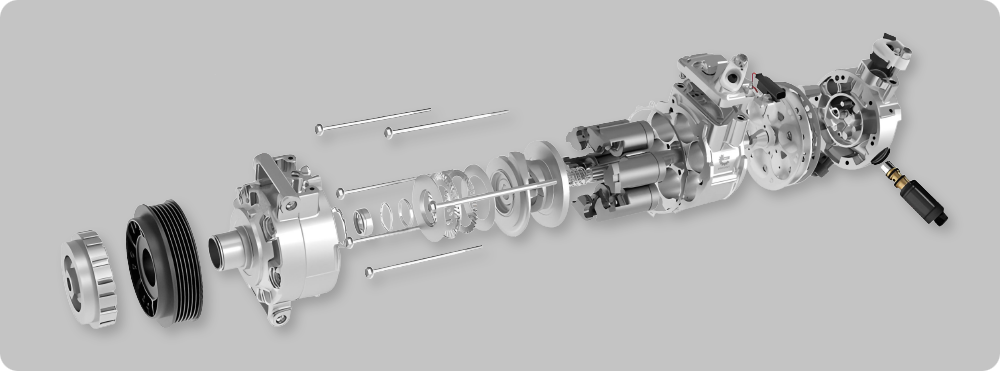
What does an automotive air conditioning compressor consist of?
An automotive A/C compressor consists, among other parts, of the housing, refrigerant-compressing elements, drive shaft, control valves, seals and the electromagnetic clutch. Depending on the design, it may also include a pulley, cylinder block, valve plate, control solenoid or safety valve. This matters for diagnostics, because the failure may concern not only the compressing mechanism itself, but also the control hardware or the compressor clutch.
What are the symptoms of a faulty air conditioning compressor?
The most common symptoms of a faulty air conditioning compressor are:
- weak cooling or no cold air from the vents
- intermittent A/C operation
- unusual noises from the compressor area
- compressor clutch not engaging
- reduced performance of the entire A/C system
In workshop practice, the cause may be mechanical wear of the compressor, clutch damage, improper lubrication, contamination in the system or a leak in the installation. That is why standard A/C service does not always solve the issue. First, you need to determine whether the compressor itself or another cooperating component is the source of the fault.
When should an air conditioning compressor be replaced?
The compressor usually needs replacement when it no longer maintains proper refrigerant flow, becomes noisy, does not engage or has suffered mechanical damage. In the event of a more serious failure, it is also worth checking system tightness, operating pressures and the condition of cooperating components such as the condenser, hoses and receiver-drier. If metal particles or other contamination have appeared in the system, replacing only one component may not be enough. For a durable repair, the job should also include diagnosing and cleaning the entire circuit.
How to choose an air conditioning compressor for a car?
An air conditioning compressor should not be selected by appearance alone. Catalogue data and compatibility with a specific vehicle version are the most important factors. During selection, you should pay attention above all to:
- OE number
- pulley diameter
- number of grooves
- compressor oil type
- compatibility with the vehicle and engine version
This is clearly visible on SKV product pages. Below are example references with links to product cards:
- 84SKV077 - 115 mm pulley diameter, PAG 46 oil, 7 grooves, 3-year warranty
- 84SKV082 - 110 mm pulley diameter, PAG 46 oil, 6 grooves, 3-year warranty
- 84SKV027 - 120 mm pulley diameter, PAG 46 oil, 4 grooves, 3-year warranty
This shows that even visually similar compressors may differ in essential installation and operating parameters. For that reason, final selection should always be confirmed by OE number and catalogue data.
What makes SKV air conditioning compressors stand out?
SKV air conditioning compressors form a dedicated 84 SKV product group that currently includes nearly 200 models for passenger cars and light commercial vehicles. An important advantage of this group is broad application coverage and a 3-year warranty.
From the perspective of workshops, wholesalers and end customers, it is also important that selection is based on precise catalogue parameters. When buying a compressor, it is always worth comparing the OE number of the old and new part and checking the installation parameters.
It is also important to remember that the air conditioning compressor works as part of the complete A/C system. That is why, in the event of a failure, repairs should be approached comprehensively and the condition of cooperating components should also be assessed.
Summary
The air conditioning compressor is responsible for compressing the refrigerant and maintaining its circulation in the entire A/C system. When it does not work properly, typical symptoms include poor cooling, no cold air, noise, engagement problems or unstable A/C operation.
The SKV 84 group currently includes nearly 200 air conditioning compressor models with a 3-year warranty. When choosing the right model, the OE number, catalogue data and technical parameters such as pulley diameter, number of grooves and oil type are crucial.
FAQ
What does an air conditioning compressor do?
The air conditioning compressor compresses the refrigerant and maintains its circulation in the A/C system, making it possible to cool the air entering the cabin.
What are the symptoms of a faulty air conditioning compressor?
The most common signs are weak cooling, warm air from the vents, noise from the compressor area, the compressor clutch not engaging and reduced A/C performance.
Does a faulty air conditioning compressor need to be replaced?
If the compressor does not maintain correct operating parameters, makes noise, does not engage or is mechanically damaged, it will usually require replacement after the entire system has been diagnosed.
How do you choose an air conditioning compressor for a car?
The safest method is by OE number and the parameters shown on the product card, such as pulley diameter, number of grooves, oil type and compatibility with a specific vehicle version.
Why is it not a good idea to choose a compressor only by its photo?
Visually similar compressors may differ in installation and operating parameters, so catalogue data and the OE number must always be checked.
