

SKV air conditioning hoses - what they are, how they work and when they should be replaced
Air conditioning hoses connect the components of the A/C system into one sealed circuit. They carry refrigerant in gaseous or liquid form, under high or low pressure, as well as the oil that lubricates the compressor. In practice, cooling performance and stable operation of the entire air conditioning system depend on their leak-tightness, temperature resistance and long-term durability. The SKV range includes both high-pressure A/C lines and high-/low-pressure air conditioning hoses. This product group covers nearly 300 hose models, including around 200 high-/low-pressure hoses and about 100 high-pressure lines. The products are covered by a 3-year warranty.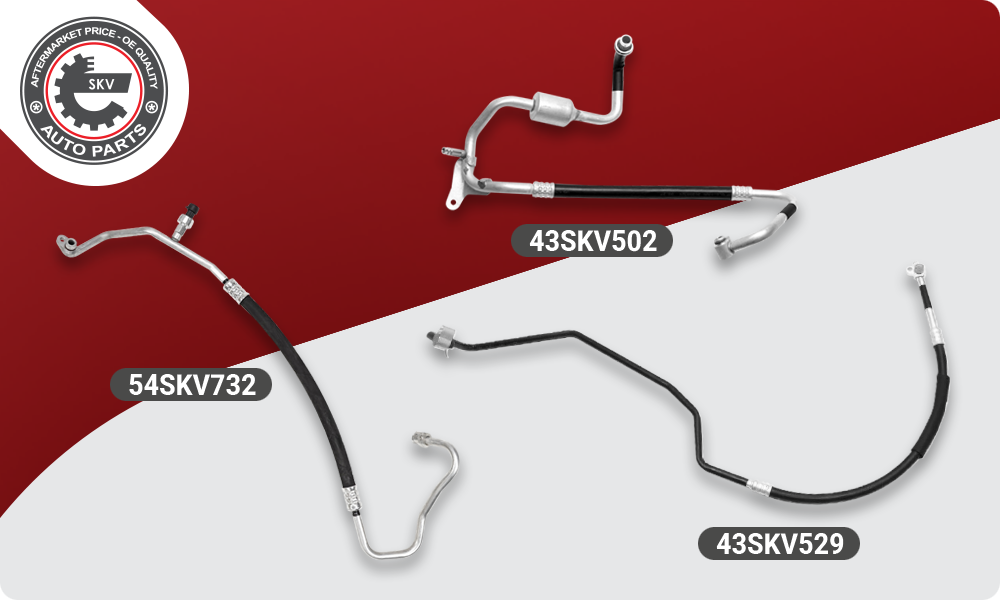
What are air conditioning hoses?
From a technical point of view, air conditioning hoses are responsible for transporting refrigerant between the compressor, condenser, receiver drier, expansion valve and evaporator. Depending on where they are installed, they carry the refrigerant either as gas or liquid and operate under different pressure and temperature conditions. That is why A/C hoses are not just connectors between components, but parts that directly affect the sealing and efficiency of the whole system.
How do air conditioning hoses work?
In workshop practice, the A/C system can be divided into high-pressure and low-pressure sections. The high-pressure hose carries the hot, compressed refrigerant from the compressor to the condenser and then, in liquid form, to the next system components. The low-pressure hose is responsible for the flow of the cooled refrigerant on the suction side, where both pressure and temperature are lower. This is why hoses must withstand pressure, temperature, oil and gas permeation through the material wall.
The A/C system diagram shown in the SKV materials makes it clear that the hoses connect all key components of the circuit: the compressor, condenser, receiver drier, expansion valve, evaporator and blower. For example, the section from the compressor to the condenser operates on the high-pressure side and carries hot gas, while the low-pressure sections carry cooler gaseous refrigerant from the evaporator back to the compressor. From a technical standpoint, air conditioning hoses must be able to transport liquid refrigerant, gaseous refrigerant and compressor oil under changing temperatures and pressure levels.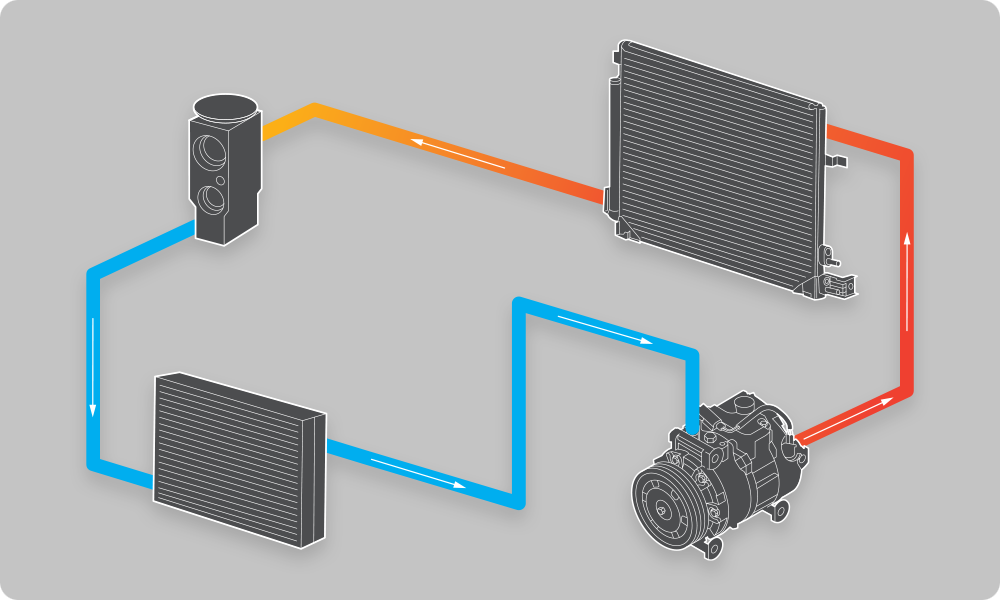
What are air conditioning hoses made of?
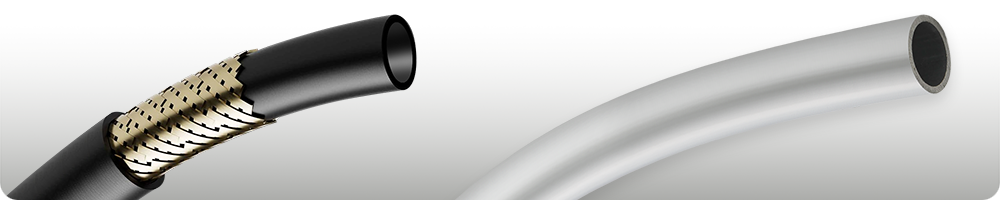
SKV offers two main solutions: 3-layer flexible hoses and aluminium pipes. The flexible hoses feature an inner butyl rubber layer with low permeability, textile braid reinforcement and an outer synthetic rubber layer resistant to high temperatures, additionally made in pin-pricked design. Aluminium hoses or pipes are lightweight, durable, easy to install and corrosion-resistant. Both versions are designed for R134a and R1234yf refrigerants.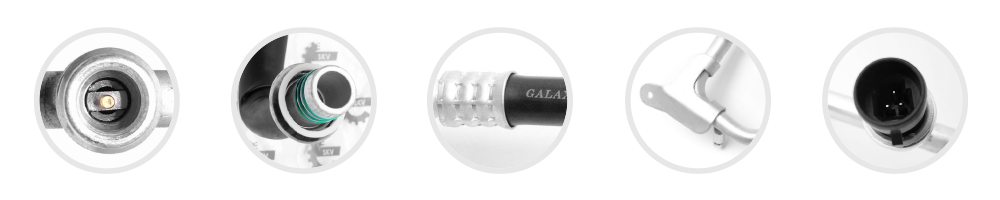
In practice, this means that the hose must combine flexibility with resistance to operating media. For SKV flexible hoses, the specified range includes temperatures from -40°C to 135°C and working/burst pressure of 70/140 bar. For SKV aluminium lines, the specification highlights damage resistance, low gas permeability, high oil resistance and a temperature range from -40°C to 180°C.
What are the typical symptoms of damaged air conditioning hoses?
Typical signs of A/C hose problems include: - reduced cooling efficiency - no cold air from the vents - frequent refrigerant loss - oil traces or dirt around connections - leaks at joints, ports or damaged sections
In workshop practice, the most common causes are cracked hoses, leaking joints, mechanical damage, material ageing and corrosion of metal parts. If a hose loses tightness, the refrigerant escapes under pressure and the A/C system starts cooling less effectively or stops working properly. Even small leaks can gradually reduce system performance and increase the risk of secondary damage to other components.
When should an air conditioning hose be replaced?
An air conditioning hose usually needs replacement when it is leaking, mechanically damaged, corroded or when leaks appear at fittings and joints that cannot be sealed permanently. In workshop practice, simply refilling the system is not enough if the root cause is a damaged hose. The leak point must be located first, the condition of the connections assessed and it must be verified whether the issue also affects other components of the A/C circuit.
How to choose the right air conditioning hose?
It is not a good idea to select a hose only by shape. The following factors matter:
• OE number
• installation point in the system
• hose type: high-pressure line or high-/low-pressure A/C hose
• compatibility with a specific vehicle and engine version
• additional features such as a sensor port, bracket or charging valve
This can be seen clearly in selected SKV examples:
- 43SKV502 - high-pressure line for selected Ford Galaxy, Seat Alhambra and VW Sharan models; OE 7M3820743AC
- 43SKV529 - air conditioning hose for selected Audi A4 B6/B7 models; OE 8E0260701AR
- 54SKV665 - example of a hose supplied together with an A/C pressure sensor
- 54SKV664 - equivalent version supplied without the pressure sensor
- 54SKV611 - example of a hose connecting the condenser to the receiver drier
- 54SKV686 - example of a hose connecting the receiver drier to the expansion valve
- 54SKV732 - example of a hose connecting the expansion valve to the evaporator
- 54SKV636 - example of a hose from the high-/low-pressure group
- 54SKV700 - example of a hose connecting the expansion valve to the A/C compressor This matters because even hoses that look similar can differ in end fitting design, sensor port presence, mounting points, connection type and scope of application.
What makes SKV air conditioning hoses stand out?
In this product group, SKV highlights several key advantages: high-quality materials, fit that supports easier installation, TecDoc availability, a 3-year warranty and broad application coverage for passenger cars and light commercial vehicles. Selected models are also available with or without an A/C pressure sensor, and some hoses include brackets, sensor ports or charging valves.
From a workshop point of view, that matters in everyday service work. An A/C hose should not only be leak-tight, but also correctly matched to the routing of the installation in the engine bay. The better the dimensional and structural fit, the lower the risk of installation problems, unwanted stress and secondary leaks.

Summary
Air conditioning hoses are one of the core parts of the A/C system because they ensure a sealed connection between all components and transport refrigerant and oil under different pressure and temperature conditions. When they fail, the most common symptoms are reduced cooling performance, refrigerant loss, leaks and oil traces around joints. The SKV range includes both high-pressure lines and high-/low-pressure air conditioning hoses for a wide range of passenger cars and vans.
FAQ
What does an air conditioning hose do? An air conditioning hose transports refrigerant and oil between A/C system components while keeping the circuit sealed under changing temperatures and pressure.
What are the symptoms of a damaged A/C hose? The most common signs are weak cooling, refrigerant loss, oil traces near joints and leaks that reduce the efficiency of the entire system.
What is the difference between a high-pressure hose and a low-pressure hose? A high-pressure hose works on the discharge side of the system and carries refrigerant at higher pressure and temperature. A low-pressure hose works on the suction side and carries cooler refrigerant at lower pressure.
How do you choose an A/C hose for a car? The safest way is by OE number, position in the system and data from the product card, taking into account hose type, fittings, connectors and any sensor port.
