

SKV air conditioning condensers – what they are, how they work, and when they should be replaced
The air conditioning condenser, also known as the A/C condenser, is one of the most important components of a vehicle’s air conditioning system. It removes heat from the hot refrigerant and allows it to change from a gaseous to a liquid state. When the condenser loses tightness, corrodes, or suffers mechanical damage, cooling performance drops and the whole air conditioning system becomes less efficient. SKV currently offers more than 650 air conditioning condenser models with a 3-year manufacturer’s warranty.
What is an air conditioning condenser?
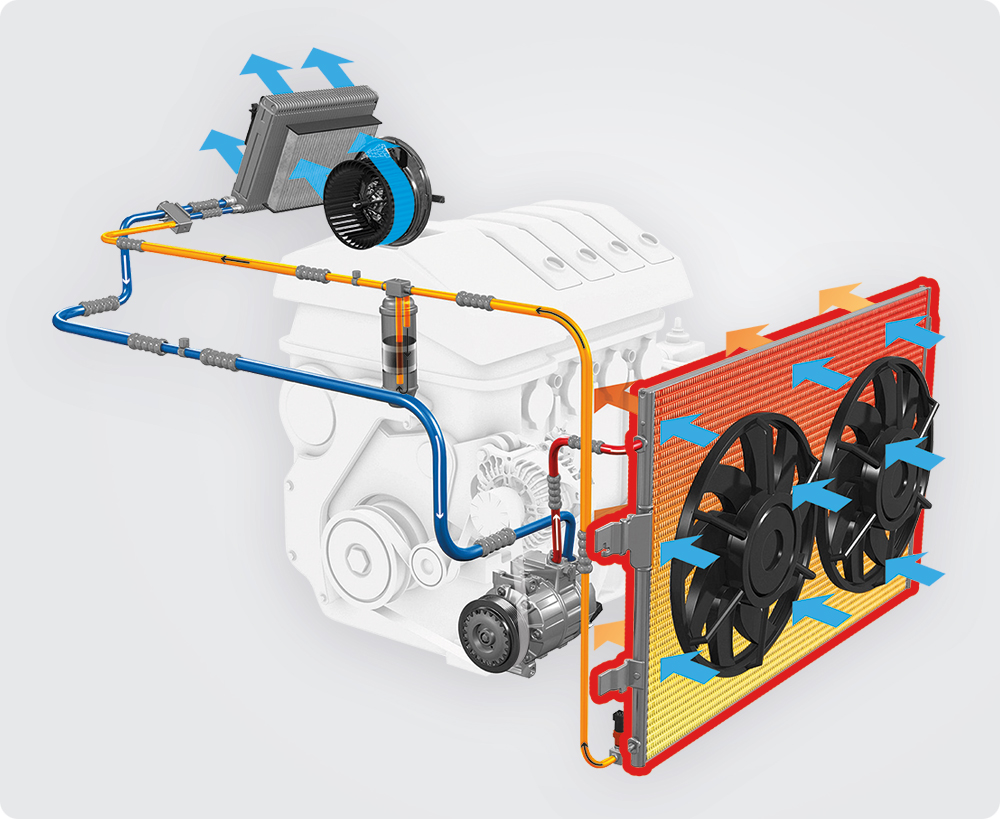
An air conditioning condenser is a heat exchanger usually mounted at the front of the vehicle, most often in front of the engine radiator or close to it. Its job is to remove heat from the compressed refrigerant and transfer it to the outside air so the refrigerant can change from gas to liquid and continue circulating through the A/C system. In practice, condenser efficiency has a direct impact on cabin cooling performance and on the stability of the whole system.
How does an air conditioning condenser work?
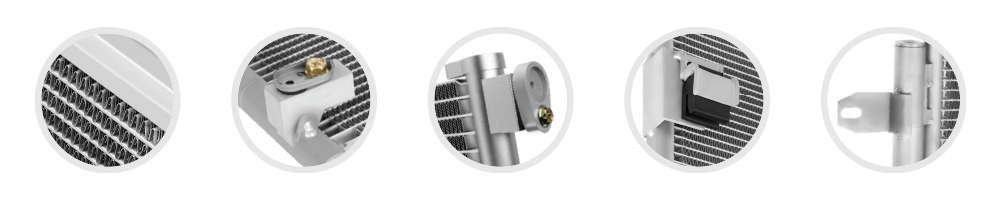
Hot refrigerant enters the condenser on the high-pressure side. As it flows through the core and cooling fins, it releases heat to the passing air and then leaves the condenser as a liquid. The main design elements include the refrigerant inlet and outlet, the condenser core, radiator fins, vibration-damping mounts, and a dryer that may be integrated or fitted as a separate module, depending on the version. The SKV range includes both serial-flow and parallel-flow designs in line with OE specifications.
Why is the condenser so important for A/C performance?
Condenser efficiency directly affects the performance of the entire A/C system. If heat exchange is restricted, the refrigerant does not condense properly and the air conditioning becomes less effective. SKV condensers are made of aluminium, undergo leak testing, and are matched to OE specifications. Depending on the application, they are designed for use with the most common refrigerants: R134a, R1234yf, and R744.
What are the typical symptoms of a faulty A/C condenser?
The most common signs of condenser problems are weak cabin cooling, a noticeable drop in A/C efficiency, refrigerant loss, and difficulty maintaining the correct system pressure. In workshop practice, common causes include corrosion, contamination of the heat-exchange surface, mechanical damage from road debris or minor front-end impacts, and leaks at the connections. If the air conditioning still cools poorly after servicing, it is worth checking not only the refrigerant charge but also the condition of the condenser itself.
When should an A/C condenser be replaced?
A condenser usually needs replacing when it is leaking, corroded, mechanically damaged, or when the heat-exchange surface is so degraded that the system can no longer maintain the correct operating parameters. Standard A/C servicing will not solve the issue if the root cause is a damaged heat exchanger. During diagnosis, it is worth checking system tightness, the condition of the fins, the area around the connections, and pressures on both the high- and low-pressure sides.
How do you choose the right A/C condenser?
A condenser should not be selected by appearance alone. In practice, the OE number, core dimensions, dryer presence, refrigerant type, and compatibility with the specific vehicle version all matter. SKV product cards list these parameters directly, and the manufacturer recommends comparing the old and new part, especially the OE number. This is important because two condensers that look similar may differ in design and application range.
Examples of SKV air conditioning condensers
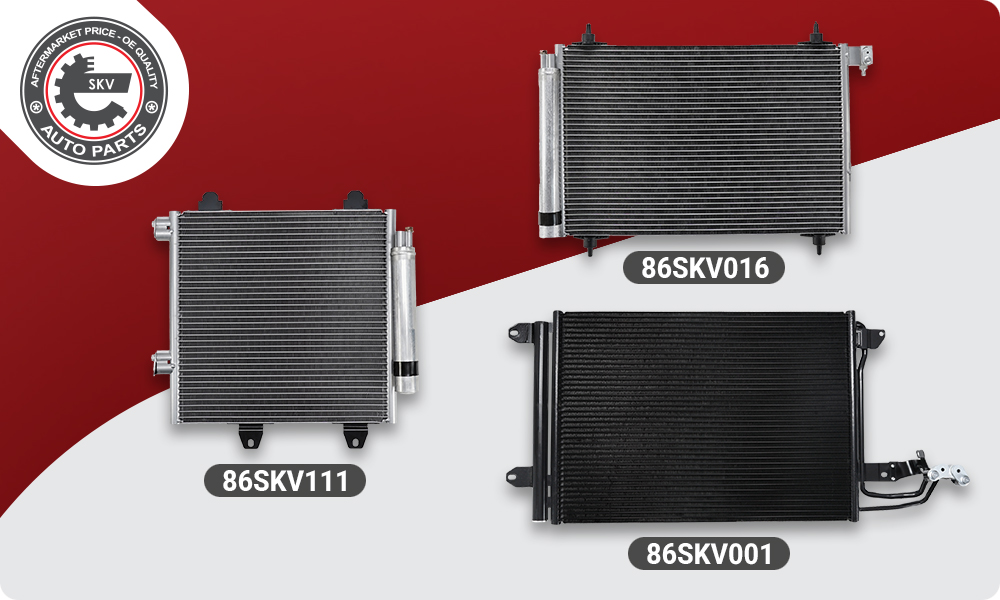
The range is best illustrated by specific references. The examples below show different applications and confirm how important product card data is when selecting the right part.
Symbol | Example applications | Selected data | OE |
|---|---|---|---|
Audi A3, Seat Leon, Skoda Octavia II, VW Caddy, Golf | aluminium, with dryer, R134a / R1234yf, core 580 × 400 × 16 mm | 1K0820411D | |
Citroën C5 II/III, C6, Peugeot 407 | aluminium, with dryer, R134a / R1234yf, core 560 × 361 × 16 mm | 6455CP | |
Citroën C1, Peugeot 107, Toyota Aygo | aluminium, with dryer, R134a / R1234yf, core 388 × 361 × 16 mm | 6455EE |
What sets SKV air conditioning condensers apart?
- more than 650 condenser models in the range,
- minimum 3-year manufacturer’s warranty,
- fitment according to OE specification,
- leak testing and corrosion resistance,
- installation accessories in line with OE specification, such as O-rings, washers, and sealing rings.
Summary
An air conditioning condenser is not just “the A/C radiator”. It is one of the core components affecting the efficiency and tightness of the whole A/C system. When it is faulty, common symptoms include weak cooling, reduced performance, refrigerant loss, and pressure-related issues. Today, SKV Group 86 includes more than 650 air conditioning condenser models with a 3-year warranty. Final selection should always be confirmed by the OE number and product card data.
FAQ
What does an A/C condenser do?
It removes heat from the hot refrigerant and allows it to change from gas to liquid so the air conditioning system can work correctly.
What are the symptoms of a faulty A/C condenser?
The most common ones are weak cooling, reduced A/C performance, refrigerant loss, leakage, and pressure problems in the system.
Can an A/C condenser corrode?
Yes. It is mounted at the front of the vehicle and is constantly exposed to moisture, road salt, dirt, and mechanical damage. Corrosion is one of the common causes of failure.
How do you choose an A/C condenser?
The safest way is by OE number and the parameters listed in the product card: dimensions, refrigerant type, dryer presence, and vehicle compatibility.
